Chemical Property
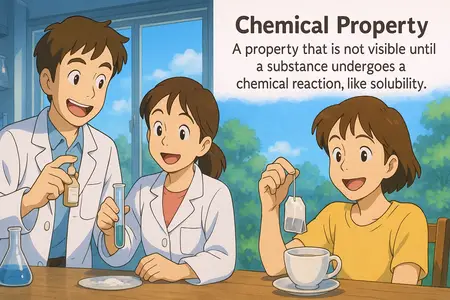
Example:
Imagine you're trying to discover the flavor of a teabag without actually brewing it. Just as you can't fully experience the taste of the tea until it's steeped in hot water, you can't observe certain chemical properties, like solubility, until a substance undergoes a chemical reaction. In both cases, whether it's the flavor of the tea or the solubility of a chemical, the true characteristic only reveals itself when the substance interacts with another medium—in one case water, in the other a reagent.
Practice Version
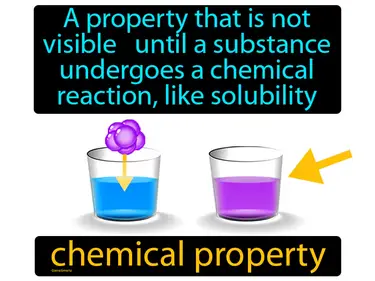
Chemical Property: A property that is not visible until a substance undergoes a chemical reaction, like solubility. Chemical property. A chemical property is a characteristic that describes a substance's ability to change into a different substance.