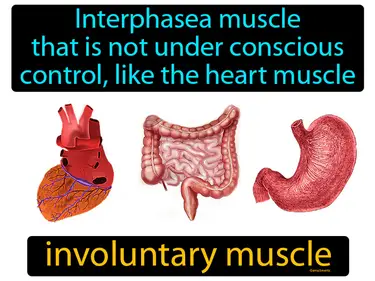
Involuntary Muscle

Example:
Imagine you're trying to manage the notifications on your phone—some pop up automatically without you having to do anything. This is similar to how involuntary muscles work in your body, functioning without conscious effort, just like those automatic notifications. Your heart muscle is like those notifications; it keeps beating and working in the background, without you having to consciously think about it, ensuring your body operates smoothly, much like your phone staying updated with information you need.
Practice Version

Involuntary Muscle: A muscle that is not under conscious control, like the heart muscle. Involuntary muscle. Involuntary muscles are muscles that work automatically without you thinking about them, like the heart pumping blood.