Law Of Conservation Of Energy
This knowledge is used in careers such as:
Teacher (Teaches Students) ~$55,000 - $95,000 - Number of jobs: 4,700,000 (324,500 Openings Per Year) +2% Growth
Civil Engineer (Designs Infrastructure) ~$65,000 - $110,000 - Number of jobs: 370,000 (23,600 Openings Per Year) +5% Growth
Electrical Engineer (Designs Electrical Systems) ~$65,000 - $115,000 - Number of jobs: 295,000 (17,500 Openings Per Year) +7% Growth
Mechanical Engineer (Designs Machines) ~$65,000 - $115,000 - Number of jobs: 290,000 (18,100 Openings Per Year) +9% Growth
Industrial Technician (Maintains & Repairs Machines) ~$50,000 - $75,000 - Number of jobs: 540,000 (54,000 Openings Per Year) +13% Growth
Explore These Careers →

Example:
Imagine you're trying to juggle the demands of work, family, and personal time throughout the week. Just like you can't magically create more hours in a day, energy in the universe can't be created or destroyed. In both cases, it's about managing and redistributing what's already there—whether it's your time or energy—ensuring nothing is lost, just transferred or transformed from one form to another.
Practice Version

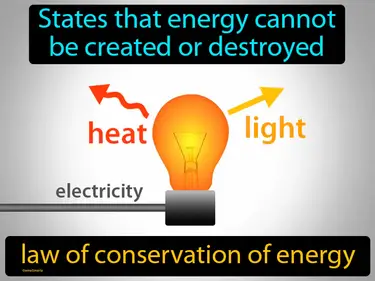
Law Of Conservation Of Energy: States that energy cannot be created or destroyed. Law of conservation of energy. Energy can change forms but the total amount always stays the same.