Electromagnetic Spectrum
Example:
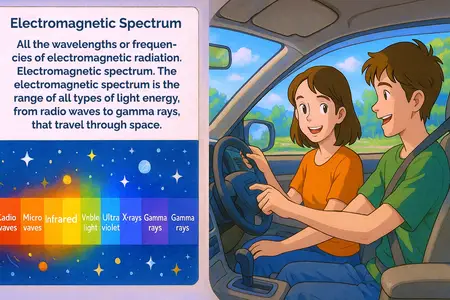
Imagine trying to find the right radio station while driving, with each station offering different music, news, or talk shows. This is similar to the electromagnetic spectrum, where each "station" represents a different wavelength or frequency of electromagnetic radiation, providing various types of information such as visible light, radio waves, or X-rays. Just as you tune your radio to match the frequency of your desired station, different devices and technologies are designed to interact with specific parts of the electromagnetic spectrum to receive or transmit the right type of information, highlighting the spectrum's diversity and utility.
Practice Version
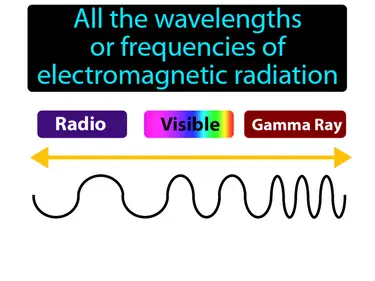
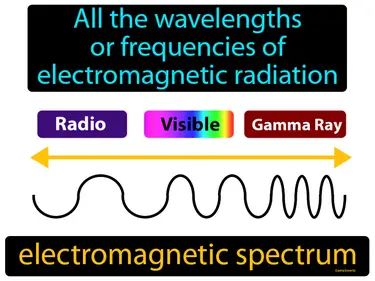
Electromagnetic Spectrum: All the wavelengths or frequencies of electromagnetic radiation. Electromagnetic spectrum. The electromagnetic spectrum is the range of all types of light, from radio waves to gamma rays, that travel through space.