Bond Energy
Bond Energy:
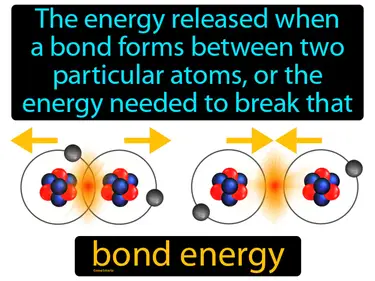
Imagine you're trying to fit a jigsaw puzzle piece into the right spot; it takes effort to find the correct piece, but once it fits, there's a satisfying snap. This is similar to bond energy, where finding the right fit between atoms takes energy, but once they connect, energy is released just like that satisfying snap. Just as the puzzle piece needs to be pulled apart if you want to remove it, requiring effort, breaking a bond also requires energy, highlighting how both processes involve energy changes to reach a stable or separate state.
Practice Version

Bond Energy: The energy released when a bond forms between two particular atoms, or the energy needed to break that bond. Bond energy. Bond energy is a measure of the strength of a chemical bond between atoms.