Organic Chemistry
Organic Chemistry:
Imagine trying to organize a large family gathering where everyone has different dietary restrictions and preferences. This is similar to how organic chemistry focuses on the vast array of compounds that all contain carbon but have different structures and behaviors. Just like coordinating a meal requires understanding each person's needs and preferences, studying organic chemistry involves understanding how carbon can bond and interact with other elements to form a variety of complex compounds. In both cases, the key is recognizing the central element—whether it's carbon in chemistry or the meal planner in a family gathering—and how it connects and interacts with everything else around it.
Practice Version

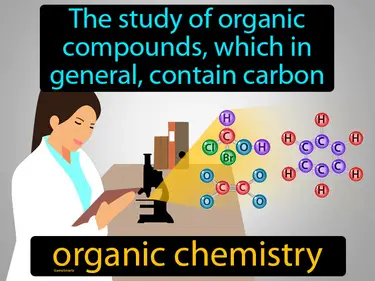
Organic Chemistry: The study of organic compounds, which in general, contain carbon. Organic chemistry. Organic chemistry is the branch of science that focuses on the structure, properties, and reactions of carbon-containing compounds.