Protective Tariff
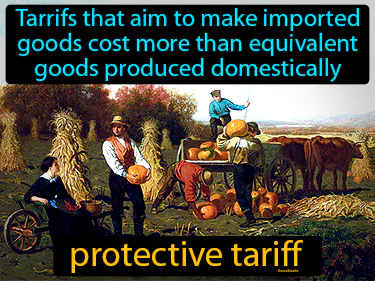
Protective Tariff:
During the time of A New Nation (1760-1800), the concept of a protective tariff was important because it helped new American industries compete against established foreign manufacturers, particularly from Britain. By making imported goods more expensive, these tariffs encouraged people to buy domestically produced items, helping to grow the young nation's economy. The idea was to protect American jobs and businesses from being overshadowed by cheaper foreign products. Today, protective tariffs still matter as they can influence the prices of everyday goods, like clothing or electronics, by making imported versions more costly and encouraging local purchases. For example, if a country imposes a protective tariff on foreign cars, it could make cars from other countries more expensive, prompting consumers to buy locally made vehicles instead, thereby supporting local jobs and businesses.
Practice Version

Protective Tariff: Tariffs that aim to make imported goods cost more than equivalent goods produced domestically. Protective tariff. Throughout history, protective tariffs have been used to shield a country's industries from foreign competition by making imported products more expensive.