Free Enterprise
Free Enterprise:
In the early 1800s, as the United States grew, the concept of free enterprise was important because it allowed businesses to operate with little government interference, encouraging innovation and competition. This system responded to the need for economic growth and individual opportunity in the new nation, helping to expand industries like manufacturing and agriculture. Free enterprise was crucial as it supported the idea of the "American Dream," where anyone could succeed through hard work and entrepreneurship. Today, free enterprise remains significant as it allows small businesses to thrive and offers consumers choices. For example, if you decide to start a lemonade stand, you set your own prices and compete with others, illustrating how free enterprise encourages creativity and personal initiative.
Practice Version

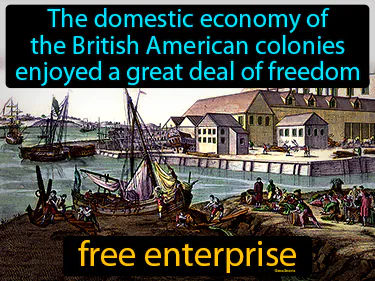
Free Enterprise: A system in which the prices for goods are self-regulated by the open market and by consumers. Free enterprise. In history, free enterprise refers to an economic system where private businesses operate with minimal government interference, allowing competition to drive innovation and efficiency.