Socialism
Socialism:
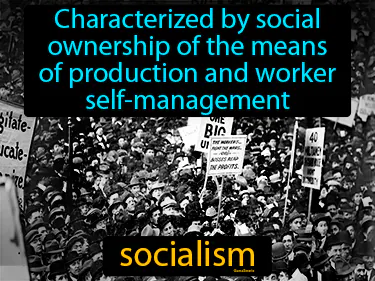
During the Industrial Revolution from 1870 to 1900, socialism emerged as a response to the harsh working conditions and economic inequality faced by factory workers. Many workers lived in poverty while factory owners became very wealthy, leading to calls for fairer distribution of wealth and better working conditions. Socialism advocated for collective ownership of factories and businesses so that profits would benefit all workers, not just the owners. Today, the concept of socialism still matters as it influences debates about healthcare, education, and workers' rights. For example, public health systems in many countries are influenced by socialist ideas, ensuring everyone has access to medical care regardless of income, which directly impacts people's everyday lives.
Practice Version

Socialism: Characterized by social ownership of the means of production and worker self-management. Socialism. In history, socialism refers to a system where the government or the community collectively controls resources and industries to promote equality and meet people's needs.