Patronage
Patronage:
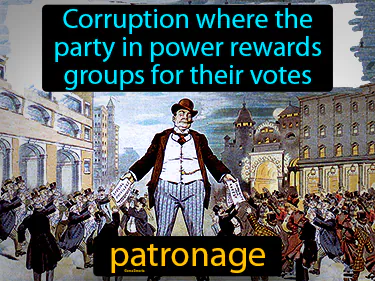
During the period of 1880-1915, patronage was a common political practice where politicians gave jobs and favors to immigrants and urban residents in exchange for their votes. This was important because it helped political parties maintain power while providing immigrants with jobs and resources, which they desperately needed as they settled in new cities. However, it also led to corruption and inefficiency in government, as positions were filled based on loyalty rather than merit. Today, the concept of patronage still matters because it highlights the importance of fairness and transparency in government. For example, if someone gets a job or a contract due to a personal connection rather than qualifications, it can lead to distrust in institutions and unfair opportunities for others.
Practice Version

Patronage: Corruption where the party in power rewards groups for their votes. Patronage. In history, patronage is when political leaders give jobs or favors to supporters in exchange for their loyalty.