Trickle-Down Economics
Trickle-Down Economics:
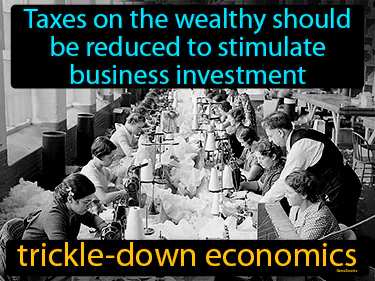
During The Great Depression, trickle-down economics was seen as a way to encourage economic recovery by reducing taxes on the wealthy, hoping they'd invest in businesses and create jobs. This idea was important because it aimed to combat widespread unemployment and financial instability during the 1928-1933 economic crisis. The concept responded to the need for increased economic activity and job creation during a time of severe financial hardship. Today, trickle-down economics remains relevant as governments debate tax policies and their impact on economic growth and inequality. For example, if a local factory owner receives a tax cut, they might expand the factory, potentially increasing job opportunities for people in your community.
Practice Version

Trickle-Down Economics: Taxes on the wealthy should be reduced to stimulate business investment. Trickle-down economics. Trickle-down economics is the idea that benefits for the rich, like tax cuts, will eventually help everyone as the money trickles down through increased business investment and job creation.