Truman Doctrine
Truman Doctrine:
The Truman Doctrine, announced in 1947, was a key policy during the early Cold War aimed at containing Soviet influence by providing political, military, and economic support to countries resisting communism. It responded to the threat of Soviet expansion in Europe and the Middle East, particularly in Greece and Turkey, which were vulnerable to communist insurgencies. This doctrine was important because it signaled the United States' commitment to preventing the spread of communism, shaping U.S. foreign policy for decades. Today, the Truman Doctrine's legacy is seen in how countries form alliances to address common threats, such as terrorism or cyber-attacks. For example, when nations collaborate to provide aid to stabilize regions in crisis, it reflects the same principle of supporting countries to maintain global peace and security, affecting how we and our communities experience international relations.
Practice Version

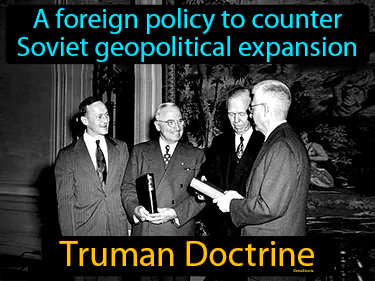
Truman Doctrine: A foreign policy to counter Soviet geopolitical expansion. Truman Doctrine. The Truman Doctrine was a U.S. policy to provide support to countries resisting communism during the early Cold War.