Troubled Asset Relief Program
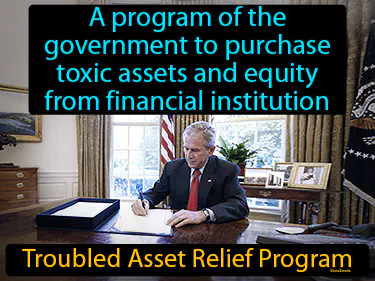
Troubled Asset Relief Program:
The Troubled Asset Relief Program (TARP) was introduced in 2008 during the financial crisis to stabilize the economy by purchasing troubled assets from banks. It was important because many financial institutions faced collapse, threatening the entire economy with a severe recession. By using TARP, the government aimed to restore confidence in the banking system and encourage lending to businesses and consumers. Today, TARP is significant because it set a precedent for government intervention in major economic crises, showing how quickly policy can be enacted to protect the economy. For example, during the COVID-19 pandemic, similar rapid responses were made, like stimulus checks, to support individuals and businesses, highlighting how such programs can impact people's financial stability.
Practice Version

Troubled Asset Relief Program: A program of the government to purchase toxic assets and equity from financial institutions. Troubled Asset Relief Program. The Troubled Asset Relief Program was a U.S. government initiative during the 2008 financial crisis to stabilize the banking system by buying problematic assets from financial institutions.