Boycott
Boycott:
During the period of 1910-1939, boycotts were a powerful tool used by people around the world to fight for national independence and rights. For instance, the Indian boycott of British goods was a significant part of the struggle for independence from British rule. This highlighted tensions between colonized nations and their colonizers, emphasizing the desire for self-determination and economic independence. These ideas still matter today, as boycotts remain a method for people to stand against companies or governments they disagree with, showing the power of collective action. For an average person, participating in a boycott can influence companies to change their practices, like choosing to buy from environmentally friendly brands to push for better environmental policies.
Practice Version

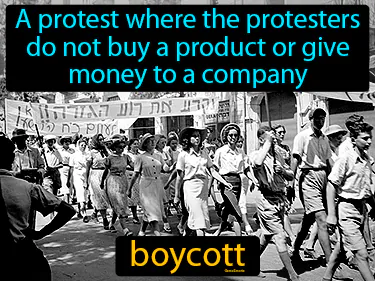
Boycott: A protest where the protesters do not buy a product or give money to a company. Boycott. In history, a boycott is when people collectively refuse to purchase or support a company or country to enforce change or express disapproval.