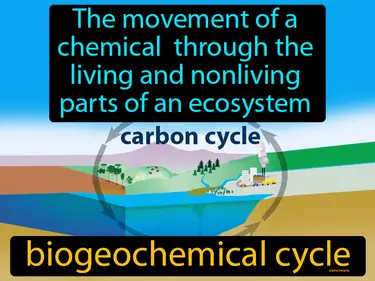
Biogeochemical Cycle

Example:
Imagine trying to keep track of a single dollar bill as it moves through various transactions in a busy city. Just like that dollar bill, a chemical in a biogeochemical cycle moves through different parts of an ecosystem, both living and nonliving. In this analogy, the dollar bill represents the chemical, the people and shops it passes through are like the plants, animals, and soil in the ecosystem, and the city itself is the entire ecosystem where these exchanges take place.
Practice Version

Biogeochemical Cycle: The movement of a chemical through the living and nonliving parts of an ecosystem biogeochemical cycle. A biogeochemical cycle is the continuous recycling of nutrients and elements through the environment, organisms, and the Earth's systems.