Fault-Block Mountain

Example:
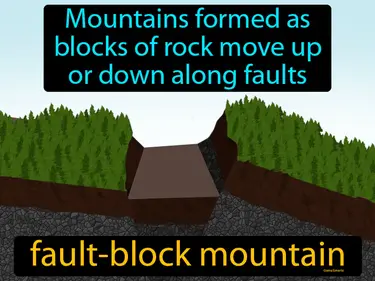
Imagine trying to rearrange a pile of uneven books on a shelf, where some books slide up or down as you attempt to balance them. This is similar to how fault-block mountains are formed, where blocks of the Earth's crust move up or down along faults, like books shifting positions on a shelf. Just as each book might tilt or shift in response to your adjustments, blocks of rock move in response to tectonic forces, creating mountains as they rise or valleys as they sink.
Practice Version

Fault-Block Mountain: Mountains formed as blocks of rock move up or down along faults. Fault-block mountain. These mountains form when Earth's crust cracks, and blocks of rock move up or down along these cracks, creating a rugged landscape.