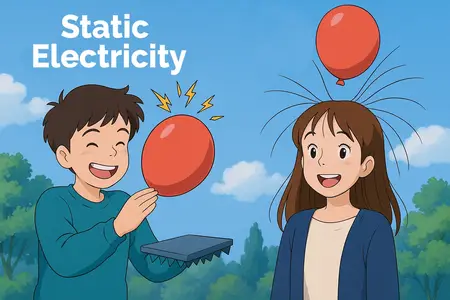
Static Electricity
This knowledge is used in careers such as:
Teacher (Teaches Students) ~$55,000 - $95,000 - Number of jobs: 4,700,000 (324,500 Openings Per Year) +2% Growth
Electrician (Installs & Repairs Electrical Systems in Buildings) ~$50,000 - $90,000 - Number of jobs: 820,000 (81,000 Openings Per Year) +9% Growth
Electrical Engineer (Designs Electrical Systems) ~$65,000 - $115,000 - Number of jobs: 295,000 (17,500 Openings Per Year) +7% Growth
Mechanical Engineer (Designs Machines) ~$65,000 - $115,000 - Number of jobs: 290,000 (18,100 Openings Per Year) +9% Growth
Industrial Technician (Maintains & Repairs Machines) ~$50,000 - $75,000 - Number of jobs: 540,000 (54,000 Openings Per Year) +13% Growth
Explore These Careers →

Example:
Imagine getting a balloon stuck in your hair after rubbing it on your sweater. This is similar to the way static electricity builds up when two different materials come into contact and then separate, like your hair and the balloon. Just as the balloon picks up strands of hair by attracting them, an object can collect and hold onto electric charges, creating a static cling that you can feel.
Practice Version
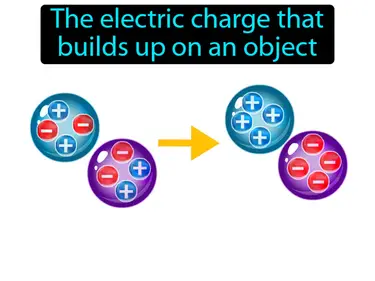
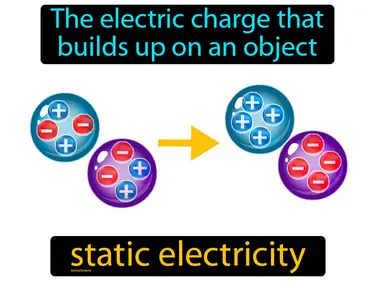
Static Electricity: The electric charge that builds up on an object. Static electricity. It's the imbalance of electric charges within or on the surface of a material.