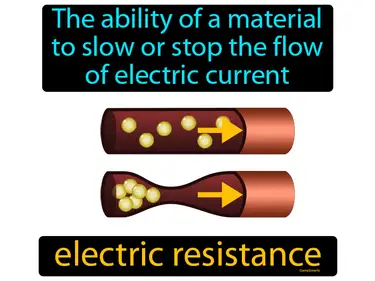
Electric Resistance

Example:
Imagine trying to walk quickly through a crowded shopping mall during a holiday sale. Just as the crowd slows you down, making it difficult to move freely, electric resistance in a material slows down the flow of electric current. In this analogy, the crowded mall represents the material, the people are like the atoms or obstacles in the material, and your attempt to walk through is akin to the electric current trying to pass through; the more crowded the mall, the higher the resistance you face, just as denser materials have higher electrical resistance.
Practice Version

Electric Resistance: The ability of a material to slow or stop the flow of electric current. Electric resistance. Electric resistance is how much a material opposes the flow of electricity through it.