Cochlea

Example:
Imagine trying to find a specific song on a radio station amidst a lot of static. Much like how a radio tuner filters through various frequencies to bring you a clear song, the cochlea in your ear filters sound vibrations, converting them into signals your brain can understand. Just as the radio's tuner discerns and amplifies the desired music from noise, the cochlea spirals with fluid and tiny hair cells that pick up sound vibrations, translating them into nerve impulses that your brain interprets as sound.
Practice Version

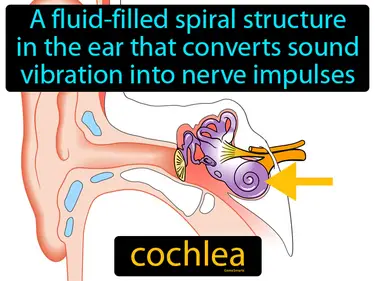
Cochlea: A fluid-filled spiral structure in the ear that converts sound vibration into nerve impulses. Cochlea. The cochlea is the part of your inner ear that helps you hear by turning sound waves into signals your brain can understand.