Doppler Effect

Example:
Imagine trying to catch a bus that's moving away from you—each step you take seems to stretch the distance between you and the bus. This situation is similar to the Doppler effect, where the sound waves from a moving source stretch or compress, changing the pitch you hear. Just like the bus moving away makes it harder for you to catch up, a receding sound source causes the sound waves to stretch, lowering the pitch, while a source moving toward you compresses the waves, raising the pitch, akin to the bus coming closer and making it easier to reach.
Practice Version

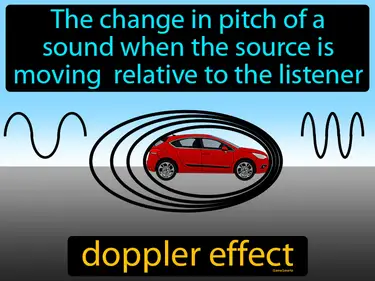
Doppler Effect: The change in pitch of a sound when the source is moving relative to the listener. Doppler effect. It is a phenomenon where the frequency of a sound or light wave changes because the source or observer is moving.