Electrolysis
Electrolysis:
Imagine trying to separate two tangled necklaces that have been jumbled together in your jewelry box. Just like how you use your fingers to carefully untangle and separate the necklaces, in electrolysis, an electric current is used to separate chemical compounds into their individual elements. In this analogy, the tangled necklaces represent the chemical compounds, your fingers are the electric current, and the act of separating the necklaces is akin to the chemical reaction that splits the compounds into separate elements.
Practice Version

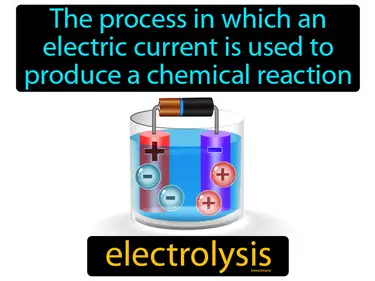
Electrolysis: The process in which an electric current is used to produce a chemical reaction is called electrolysis. Electrolysis is a method where electricity splits substances into their individual components.