Nonpoint Source Pollution

Example:
Imagine trying to figure out why your home is getting dusty so quickly, despite regular cleaning. This is similar to nonpoint source pollution, where contamination doesn't come from a single place but rather from many small sources that are difficult to pinpoint. Just as dust enters your home from various inconspicuous places like open windows, shoes, and even pets, nonpoint source pollution accumulates in the environment through numerous minor contributors, such as runoff from streets, fields, and lawns, making it challenging to identify and control.
Practice Version

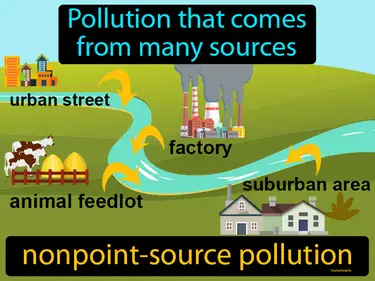
Nonpoint Source Pollution: Pollution that comes from many sources. Nonpoint source pollution. This type of pollution occurs when runoff from rainwater collects chemicals and debris from surfaces like roads and fields, carrying them into rivers and lakes.