Bleaching
Bleaching:
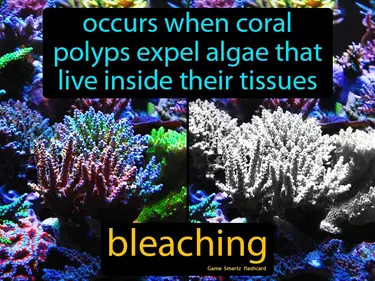
Imagine having a friend who always helps you with your homework, but one day, you have a disagreement, and your friend decides to leave. Similarly, coral polyps rely on a symbiotic relationship with algae, which provide them with nutrients, but stressors like temperature changes can cause the corals to expel these helpful algae. Just as losing your friend leaves you without their support, the corals lose their vibrant color and essential nutrients when they expel the algae, leading to coral bleaching.
Practice Version

Bleaching: Occurs when coral polyps expel algae that live inside their tissues. Bleaching. Bleaching is when corals lose their color due to stress, often from warmer water, which can harm or kill them.