Trade Winds
Trade Winds:
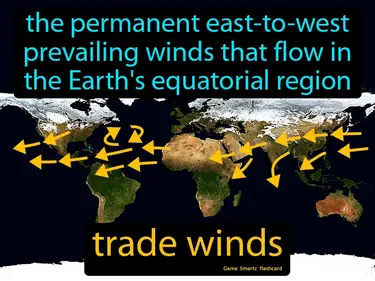
Imagine trying to walk through a crowded hallway where everyone seems to be moving in the same direction, making it hard to go the opposite way. This is similar to how the trade winds work, as they are consistent and strong winds that push from east to west in the Earth's equatorial region. Just like the flow of people in the hallway creates a dominant direction that influences your movement, the trade winds create a prevailing east-to-west flow that influences weather patterns and ocean currents in the equatorial zone.
Practice Version

Trade Winds: The permanent east-to-west prevailing winds that flow in the Earth's equatorial region. Trade winds. Trade winds are steady winds that blow towards the equator, helping ships travel across oceans.