Virginia Statute For Religious Freedom
Virginia Statute For Religious Freedom:
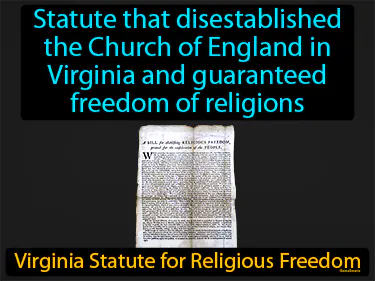
The Virginia Statute for Religious Freedom, enacted in 1786, was crucial because it marked a significant shift towards the separation of church and state, influencing the First Amendment of the U.S. Constitution. By disestablishing the Church of England in Virginia, it highlighted the tension between religious authority and individual freedom, a debate still relevant in discussions about religious expression today. This statute laid groundwork for legal protections ensuring that individuals can practice any religion or none without government interference. In everyday life, this means people can choose how or if they want to worship, without fear of government punishment or favoritism. It supports a diverse society where various beliefs can coexist, promoting tolerance and understanding.
Practice Version

Virginia Statute For Religious Freedom: Statute that disestablished the Church of England in Virginia and guaranteed freedom of religions. Virginia Statute for Religious Freedom. This document, written by Thomas Jefferson in 1786, ensured the separation of church and state and protected individual religious beliefs.