Depression
Depression:
In the 1780s, after the American Revolutionary War, the United States faced a depression due to war debts, disrupted trade, and a lack of strong central government to manage the economy. This economic downturn highlighted the weaknesses of the Articles of Confederation, prompting leaders to form a stronger federal government with the U.S. Constitution in 1787. The depression emphasized the need for a unified economic policy and a strong central authority to stabilize and grow the economy. Today, economic depressions still matter because they can lead to high unemployment, business failures, and personal hardships. For example, if a family member loses their job during an economic downturn, it can affect your family’s ability to pay bills, buy groceries, and maintain a stable home, showing how economic health is crucial for everyday life.
Practice Version

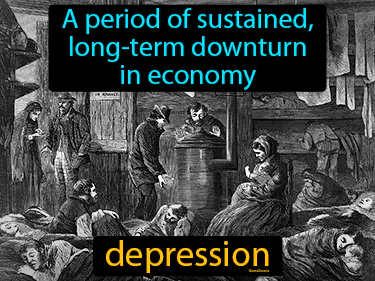
Depression: A period of sustained, long-term downturn in economy. Depression. In history, a depression is a severe and prolonged economic slump, like the Great Depression of the 1930s, which caused massive unemployment and hardship.