Tariff
Tariff:
During the Global Age, from 1420 to 1750, tariffs were crucial as European countries explored and traded with the Americas. They used tariffs to protect their own economies by making imported goods more expensive than local products, encouraging people to buy domestic items. This was important for building national wealth and funding further exploration and colonization. Today, tariffs still affect everyday life by influencing the prices of imported goods, such as electronics or cars, which can become more expensive due to these taxes. For example, if the U.S. imposes a tariff on imported steel, it could raise the cost of products like cars or appliances, affecting how much people pay for these items.
Practice Version

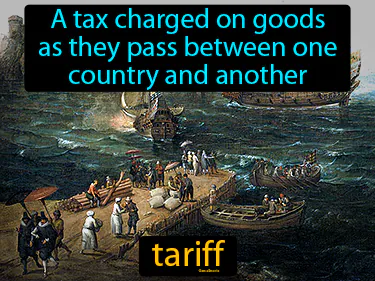
Tariff: A tax charged on goods as they pass between one country and another. Tariff. In history, a tariff is a tax imposed by a government on imported or exported goods to protect domestic industries and generate revenue.