Interstate Commerce Act
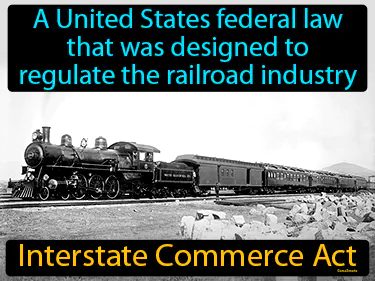
Interstate Commerce Act:
The Interstate Commerce Act of 1887 was important because it was the first federal law to regulate private industry, specifically targeting unfair practices by railroads during the Industrialization era. At the time, railroads were crucial for transporting goods, but they often charged high rates and gave special treatment to certain companies, which harmed smaller businesses and farmers. The Act aimed to ensure fair rates and prevent monopolistic practices, highlighting the tension between big businesses and public interest—a debate that continues today. This legislation laid the groundwork for future regulations that protect consumers and promote competition, such as those seen in the airline and telecommunications industries. In daily life, these regulations help keep prices fair and services accessible, ensuring that businesses can't exploit their power to the detriment of the average person.
Practice Version

Interstate Commerce Act: A federal law that was designed to regulate the railroad industry. Interstate Commerce Act. The Interstate Commerce Act was a law passed in 1887 to ensure fair rates and to regulate the monopolistic practices of railroads in the U.S.