Great Compromise
Great Compromise:
The Great Compromise was crucial because it balanced the interests of both large and small states by creating a bicameral legislature consisting of the Senate and the House of Representatives. It highlighted the ongoing tension between states' rights and federal power, which remains relevant in discussions about how much influence individual states should have compared to the federal government. This compromise allows all states to have equal representation in the Senate, while representation in the House is based on population, ensuring fairness in law-making. Today, this structure affects daily life by influencing how laws are made and who gets elected, impacting everything from taxes to education policies. For example, smaller states like Wyoming have the same number of senators as larger states like California, affecting national decisions that impact everyone, such as healthcare or transportation funding.
Practice Version

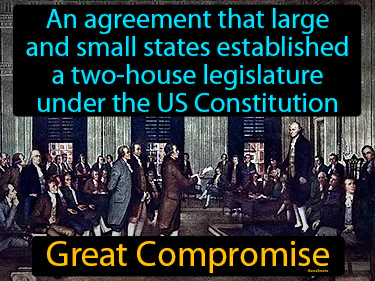
Great Compromise: An agreement that large and small states established a two-house legislature under the US Constitution. Great Compromise. The Great Compromise was an agreement reached in 1787 that created a two-house Congress, balancing the interests of both large and small states.