Nuclear Fusion

Example:
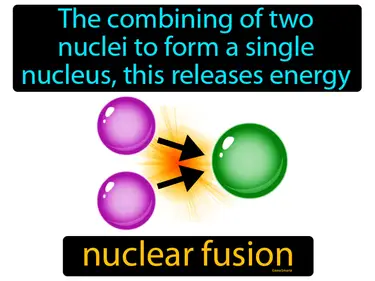
Imagine trying to combine two small balls of dough to make one larger, more robust ball for baking. This is similar to nuclear fusion, where two small atomic nuclei merge to form a single, larger nucleus. Just as combining dough balls can create a larger, more useful piece of dough for your baking needs, when two atomic nuclei combine, they release energy, providing a more stable nucleus, much like creating a perfect dough ball ready for baking.
Practice Version

Nuclear Fusion: The combining of two nuclei to form a single nucleus, this releases energy. Nuclear fusion. Nuclear fusion is a process where two light atomic nuclei merge to form a heavier nucleus, releasing a large amount of energy, like in the sun.