Hydroelectric Energy

Example:
Imagine you're trying to fill a bucket with water from a flowing stream, but the bucket has a small hole at the bottom. Just like you use the water flowing into the bucket to maintain a steady level despite the leak, hydroelectric energy uses the flow of water to generate a continuous supply of electricity. In both cases, the key is harnessing the movement of water—in the stream to keep your bucket full and in a river to spin turbines that produce electricity—transforming a natural flow into a useful resource.
Practice Version

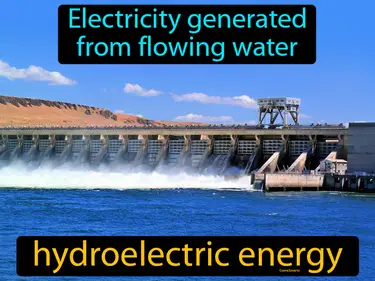
Hydroelectric Energy: Electricity generated from flowing water. Hydroelectric energy. It's a method of producing electricity using the movement of water, typically through dams, to turn turbines.