Law Of Conservation Of Charge

Example:
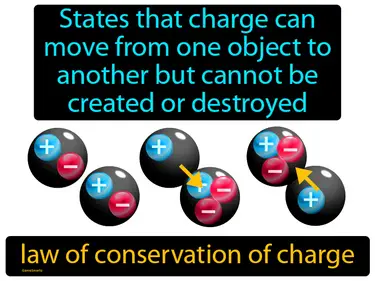
Imagine trying to divide a fixed amount of pizza among your friends at a party; no matter how you slice it or who you give it to, the total amount of pizza remains the same. Similarly, the law of conservation of charge tells us that electric charge can be transferred between objects, but the total amount of charge in a closed system remains constant. Just as you can't magically create more pizza out of thin air or make it disappear, electric charge cannot be created or destroyed, only shifted around from one place to another.
Practice Version

Law Of Conservation Of Charge: States that charge can move from one object to another but cannot be created or destroyed. Law of conservation of charge. This law means that the total charge in a closed system always stays the same.