Reparations
Reparations:
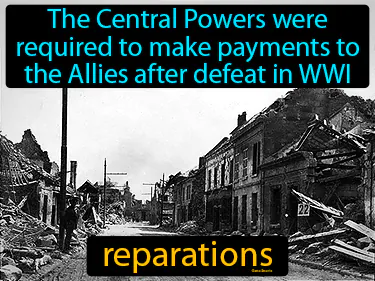
After World War I, the Central Powers, mainly Germany, were required to pay reparations to the Allies to compensate for war damages. This was important because it aimed to hold the losing countries accountable and help rebuild the nations devastated by the war. However, these payments placed a huge financial burden on Germany, leading to economic problems and resentment. Today, the concept of reparations can be seen in discussions about compensating communities affected by historical injustices, like slavery or colonization. For example, if a city decides to provide reparations to descendants of enslaved people, it can help address past wrongs and promote healing and equality in that community.
Practice Version

Reparations: The Central Powers were required to make payments to the Allies after defeat in WWI. Reparations are payments made by a defeated country to compensate for the damage caused during a war.