War-Guilt Clause
War-Guilt Clause:
The war-guilt clause, part of the Treaty of Versailles, forced Germany to accept full responsibility for World War I, including all the damages caused. This clause was significant because it justified the reparations Germany had to pay to the Allied countries, which deeply impacted its economy and national pride. It responded to the need for accountability and reparations after the massive destruction of WWI. Today, the concept of taking responsibility for one's actions still matters, as it relates to fairness and justice in everyday life. For example, if someone accidentally damages another person's property, accepting responsibility and making amends can help repair relationships and ensure fairness, just as countries sought accountability and reparations after the war.
Practice Version

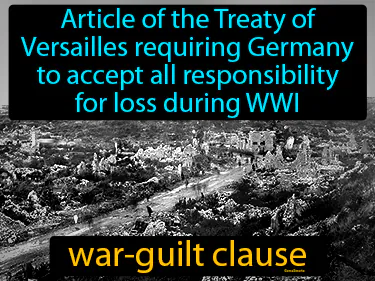
War-Guilt Clause: Article of the Treaty of Versailles requiring Germany to accept all responsibility for loss during WWI war-guilt clause. The war-guilt clause forced Germany to admit it was responsible for starting World War I.