Radio Waves

Example:
Imagine trying to carry a large, lightweight balloon across a crowded room without bumping into anyone. Just like how you have to carefully navigate with the balloon, radio waves move through space with their long wavelengths, effortlessly passing through obstacles. The balloon's size and lightness represent the long wavelengths and low frequencies of radio waves, allowing them to travel great distances and penetrate through walls without much interference, just as you manage to weave through the crowd with your balloon.
Practice Version

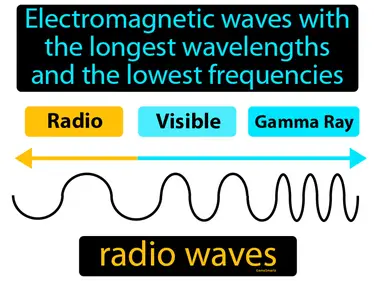
Radio Waves: Electromagnetic waves with the longest wavelengths and the lowest frequencies radio waves. Radio waves are invisible energy waves used for communication.