Daltons Atomic Theory
Daltons Atomic Theory:
Imagine trying to bake a cake without having any idea what ingredients are needed or how they combine to create the final product. Just like figuring out which ingredients and their quantities lead to a successful cake, Dalton's atomic theory aimed to explain how atoms, the building blocks, combine in specific ways to result in different chemical compounds. Just as knowing the right ingredients and measurements is crucial to baking, understanding how atoms combine helps us comprehend the nature and behavior of substances at the atomic level, providing a recipe for chemical reactions.
Practice Version

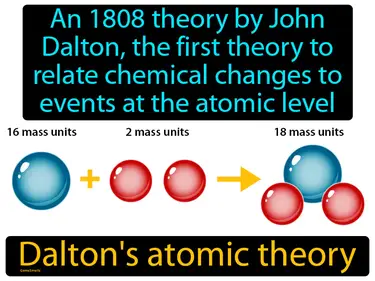
Daltons Atomic Theory: An 1808 theory by John Dalton, the first theory to relate chemical changes to events at the atomic level, Dalton's atomic theory. Dalton's atomic theory states that matter is made of small, indivisible particles called atoms.