Seismic Wave
Example:
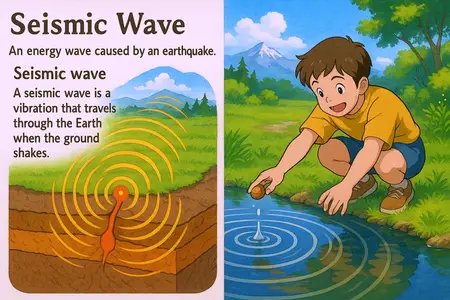
Imagine you drop a small stone into a calm pond and watch as ripples spread outwards from the point of impact. This is similar to how seismic waves behave during an earthquake, where energy is released and travels outward from the quake's origin, much like the ripples from the stone. Just as the stone causes waves in the water, the energy from the earthquake generates waves that move through the Earth's crust, with both scenarios illustrating how an initial disturbance can propagate energy through a medium.
Practice Version

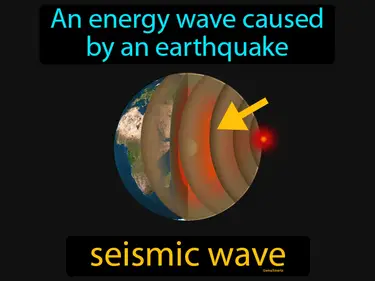
Seismic Wave: An energy wave caused by an earthquake. Seismic wave. Seismic waves are vibrations that travel through the Earth, caused by the sudden release of energy during an earthquake.