Seismograph

This knowledge is used in careers such as:

Teacher (Teaches Students) ~$55,000 - $95,000 - Number of jobs: 4,700,000 (324,500 Openings Per Year) +2% Growth

Civil Engineer (Designs Infrastructure) ~$65,000 - $110,000 - Number of jobs: 370,000 (23,600 Openings Per Year) +5% Growth

Mechanical Engineer (Designs Machines) ~$65,000 - $115,000 - Number of jobs: 290,000 (18,100 Openings Per Year) +9% Growth

Architect (Designs Buildings) ~$60,000 - $105,000 - Number of jobs: 120,000 (7,800 Openings Per Year) +4% Growth

Industrial Technician (Maintains & Repairs Machines) ~$50,000 - $75,000 - Number of jobs: 540,000 (54,000 Openings Per Year) +13% Growth

Explore These Careers →

Seismograph Meaning

Example:

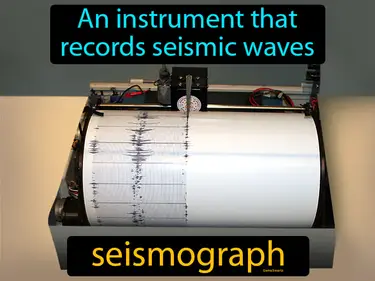
Imagine you're trying to figure out which of your neighbors is playing loud music through the vibrations you feel in your apartment walls. This situation is similar to how a seismograph works because it detects and records the vibrations caused by seismic waves traveling through the Earth. Just like you sense the music vibrations to identify where the sound is coming from, a seismograph senses seismic waves to determine the location and intensity of an earthquake, with the vibrations in your walls acting like the seismic activity that the seismograph records.
Seismograph Definition

Practice Version

Seismograph Definition

Seismograph: An instrument that records seismic waves. Seismograph. A seismograph is a machine that measures the shaking of the ground during an earthquake.

YouTube Video: