Strike Slip Fault

Example:
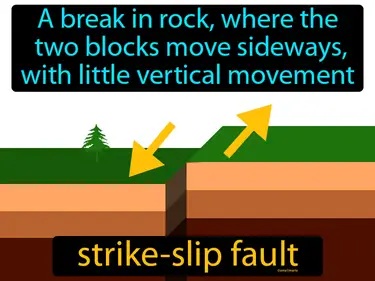
Imagine you're at a crowded concert, and everyone is trying to make their way to the exits, causing people to shuffle sideways to squeeze through the crowd. This is similar to a strike-slip fault, where two blocks of rock slide past each other horizontally, much like concert-goers moving sideways with little vertical change in position. Just as the crowd moves side to side to find their way out without jumping up or down, the rocks in a strike-slip fault shift horizontally along a fault line, emphasizing lateral movement with minimal vertical displacement.
Practice Version

Strike Slip Fault: A break in rock where the two blocks move sideways, with little vertical movement, is called a strike slip fault. It is a type of fault where two blocks of the Earth's crust slide past each other horizontally.